

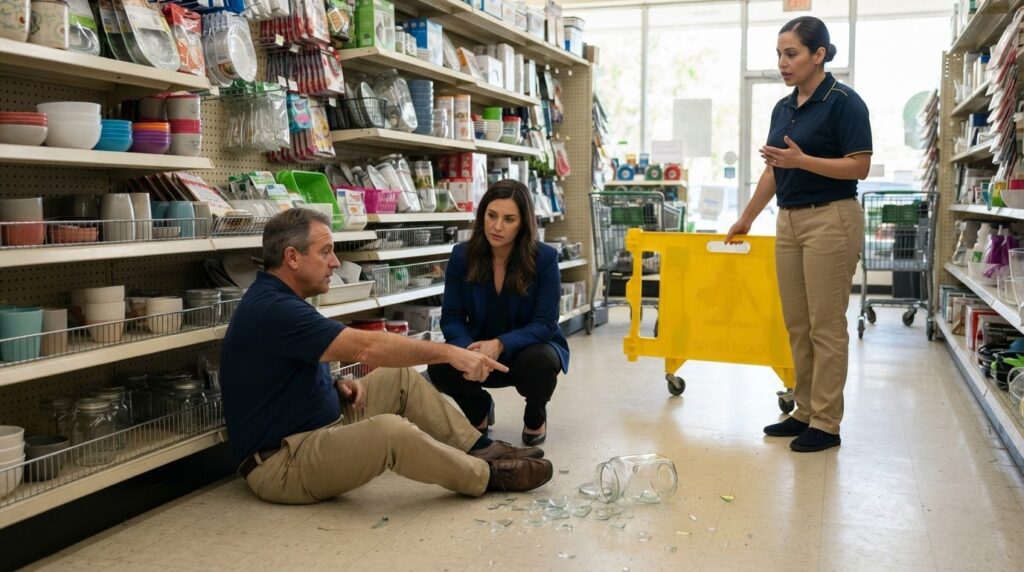

A fall in a Dollar Tree aisle doesn’t automatically make the store liable. A slip and fall occurs when a shopper loses footing or trips because of a hazard, such as a wet floor or merchandise blocking a walkway. A lawyer for an injury at Dollar Tree can assess whether the store knew or should have known about the hazard and failed to address it or warn customers.
It’s understandable to want clear answers after a sudden fall, especially when pain or medical costs follow. The store’s condition, what staff knew, and the evidence available can all matter. This guide explains what may qualify as a slip and fall, which hazards to document, when Dollar Tree may be responsible, and what losses a claim may involve.
You’ll also learn practical steps for documenting an incident and why preserving evidence matters, particularly if the store disputes responsibility. If you were hurt in Miami or Fort Lauderdale, understanding these issues can help you consider what to do next.
Key Takeaways
- Wet floors, fallen merchandise, broken glass, and obstructed aisles can create hazards that lead to a store fall.
- Report the incident to store management, photograph the hazard and surrounding area, and collect witness contact information.
- Prompt medical evaluation can document injuries, including symptoms that appear after the fall.
- Store responsibility can depend on whether it knew or should have known about a hazard and failed to address it or warn customers.
- A claim may involve medical costs, lost income, pain and suffering, and other losses tied to the injury.
What Is a Slip and Fall Accident?
A slip and fall happens when a store hazard causes someone to lose footing or trip and suffer an injury. At Dollar Tree, the cause of the fall, the resulting harm, and the available evidence help explain what happened.
Injuries Linked to Store Falls
A fall onto a hard floor can injure the head, back, neck, wrists, or hips. The injuries depend on how the person fell, what they struck, and whether they tried to break the fall.
Some symptoms appear later. Brain injuries, disc herniations, and deep soft-tissue injuries may become noticeable days after a Dollar Tree accident. Note new pain or limitations and tell a medical professional how the fall happened. A medical evaluation can document symptoms and guide care, even if the initial impact seemed minor.
Common Causes of Slip-and-Fall Accidents
A wet floor, spilled liquid, or freshly cleaned surface that remains slippery can make an aisle dangerous. Broken glass, fallen products, torn carpeting, or a loose mat can also cause a shopper to slip or trip.
Merchandise and displays can obstruct walkways. For example, a bread rack left in an aisle may force shoppers to step around it or create a tripping hazard. A staff ladder where customers walk presents another risk. Document the precise location and condition, including whether a warning sign marked the hazard.
Investigating the Store Incident
An investigation examines how the hazard arose and what happened before and after the fall. Relevant evidence may include an incident report, store video, photographs of the aisle, witness accounts, and staff names.
Inspection records can help show whether the area was checked or whether a hazard remained. Medical records connect the fall to reported injuries and treatment. A lawyer can seek and assess these materials, then compare accounts with the physical conditions shown in photos or footage. A fall in Miami or Fort Lauderdale may involve a personal injury claim based on the incident’s facts and evidence.
Steps After a Fall
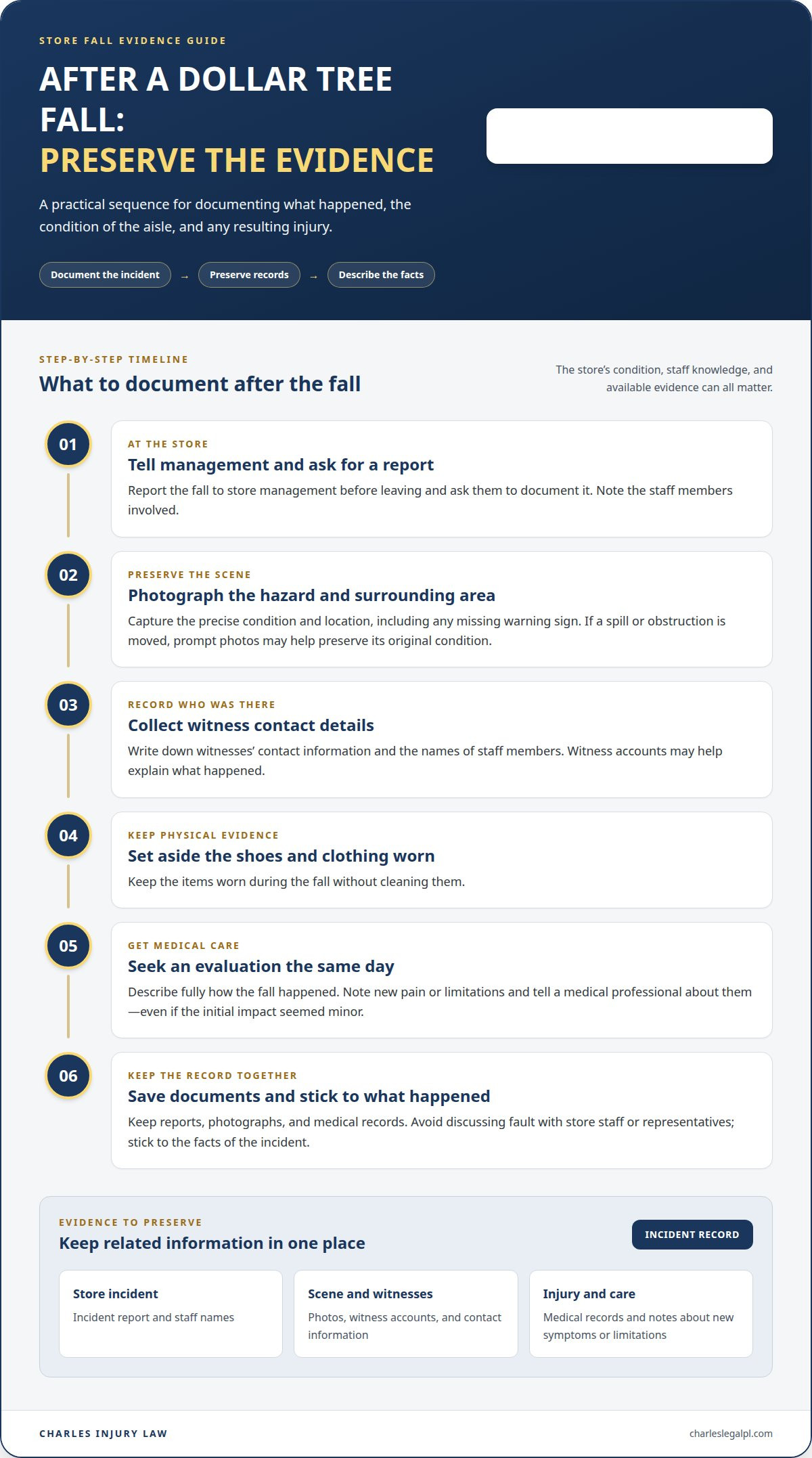
Tell store management about the fall before leaving and ask them to document it. Photograph the hazard, surrounding area, and any missing warning sign. If a spill or obstruction is moved, prompt photos may preserve its original condition.
Collect witnesses’ contact information and note staff names. Keep the shoes and clothing worn during the accident without cleaning them. Seek medical evaluation the same day, and describe the fall fully to the medical professional. Save reports, photographs, and medical records. Avoid discussing fault with store staff or representatives; stick to the facts of what happened.
Compensation for medical expenses and lost income
A Dollar Tree injury claim may involve past and future medical costs, lost income, and losses affecting daily life. How much compensation can I get for a Dollar Tree injury? There’s no fixed amount. The evidence of your injuries, treatment, income loss, and lasting effects helps determine a claim’s value.
Potential Compensation Types
Medical expenses may include care already received and future treatment related to the injury. Lost-income claims may include wages missed during recovery and income affected by lasting work limitations. Keep medical records, bills, and documents showing missed work together so the claimed losses connect clearly to the fall.
Other potential damages include physical pain and suffering, loss of enjoyment of life, and permanent disability. These losses concern how the injury affects ordinary activities, not just expenses. For example, records describing continuing limitations can help explain why someone can no longer perform certain tasks or enjoy previous routines.
Evaluating Potential Compensation
A claim’s value depends on the injury’s documented effects, medical care, income changes, and anticipated future needs. A short recovery with limited treatment involves different losses from an injury requiring ongoing care or affecting someone’s ability to work. Medical records and employment documents help show the extent of those effects.
Preserve bills, treatment records, wage information, and notes about continuing limitations as soon as possible. If future care is expected, records should explain the treatment and its connection to the fall. A claim should account for losses already incurred and supported future expenses, not just today’s bills.
A store customer’s injury claim differs from a workplace injury claim. Workers’ compensation generally concerns an employee injured at work, and its benefits can help cover hospital bills and lost wages. If you were working at Dollar Tree when injured, a workers’ compensation lawyer can help organize claim paperwork, medical records, and wage-loss information. The specific forms depend on the claim process; don’t treat a shopper’s premises-liability claim as an employee claim form.
If you were shopping, focus on evidence connecting the store incident to your medical expenses and lost income. Reviewing the incident report, witness accounts, treatment records, and wage documents can help identify which losses the evidence supports. The details matter: missing records or gaps in treatment can make it harder to explain the injury’s effects.
For help organizing questions about an injury claim and its documented losses, contact the legal team.
When a store may be liable under premises liability
A fall inside Dollar Tree doesn’t automatically establish liability. In Florida, key questions include what hazard caused the injury, whether the store knew or should have known about it, and whether the hazard led to documented harm.
Retailer Premises Liability Duties
Retail stores must maintain their premises in a reasonably safe condition. This includes looking for hazards, addressing unsafe conditions within a reasonable timeframe, and warning visitors about dangers the store knew or should have known about.
For example, a liquid spill left on an aisle floor can raise questions about inspections, cleanup, and warnings. A missing sign may help explain the conditions, but it doesn’t decide the claim on its own.
Establishing Negligence and Liability
An injury claim generally involves four elements: duty, breach, causation, and damages. The customer must connect the store’s failure to address a hazard with the fall and resulting injury.
A photograph of a spill, an incident report, witness accounts, inspection records, and medical records can each support different parts of that account. For example, footage showing a spill before the fall may help establish how long the hazard existed.
Notice matters. The investigation examines whether Dollar Tree had actual notice of the hazard or should reasonably have discovered it. A worker’s report about a spill could show actual notice. Evidence that the hazard remained despite inspections could help assess whether the store should have known about it.
The hazard’s location and the store’s response also matter. A fallen product in an aisle, a slippery freshly cleaned floor, or broken glass near a checkout area may call for different evidence. The investigation can compare witness descriptions, photographs, reports, and available footage to reconstruct what happened and when.
Responsibility may not be limited to the retailer. A contracted delivery driver or another party may have created the condition. The investigation should identify who controlled the area and who may have caused or failed to address the hazard. Those facts can affect which parties belong in an injury claim.
A premises-liability attorney can assess the evidence, identify potentially responsible parties, and evaluate how Florida law applies. An attorney can also organize records and address disputes about notice, causation, or the extent of the injury. These questions are central to evaluating liability, not just the severity of symptoms.
Before pursuing a claim, preserve photographs, witness details, medical records, and store communications. An attorney can use these materials to assess competing accounts and identify gaps in the evidence. Florida law sets deadlines for bringing claims, so getting advice promptly can help protect the opportunity to investigate while relevant evidence remains available.
Common store hazards that can cause falls
A fall at Dollar Tree may start with a slippery surface or an obstacle in a shopper’s path. The specific hazard matters: a wet floor can cause a slip, while a rack blocking an aisle can cause a trip. Identifying exactly what was underfoot or obstructing the route helps document how the accident happened.
Inside a store, possible hazards include:
- Spills or wet floors, including freshly cleaned surfaces that haven’t dried.
- Broken glass, fallen merchandise, or items left on the floor.
- Staff ladders, display racks, or merchandise obstructing an aisle.
- Torn carpeting or mats that shift or catch a shopper’s foot.
- Missing warning signs near a slippery or otherwise hazardous area.
For example, a shopper may trip over a bread rack extending into an aisle. A fallen product near a shelf can create a similar obstacle, especially if shoppers must step around it. The location, size, and visibility of the obstruction help explain how it affected the walking path. Photos can document these details before merchandise or equipment is moved.
Wet surfaces create a different risk. A spill may be difficult to see against the floor, while a recently cleaned area may remain slippery. Broken glass can also make a walkway unsafe. Document the exact area and any visible warning signs, or their absence. These details help distinguish the reported hazard from other nearby conditions.
Hazards can extend beyond the sales floor. Cracked pavement, poor lighting, carts blocking a route, or an unmaintained entrance may contribute to a fall near the store. For an incident outside, photographs should show the walking surface and surrounding conditions. A close-up alone may not show how the hazard fit into the route a customer was using.
Evidence can change quickly after a fall. Employees may clean a spill, remove broken glass, return fallen items to shelves, or move a ladder. Prompt photos can document what the area looked like. Store footage may also show the condition before the accident, the shopper’s route, and whether employees approached the hazard.
A law firm investigating a Dollar Tree fall can compare photographs, witness accounts, store reports, and available footage. The location and type of hazard guide which evidence matters most. Medical records from emergency care, a hospital, or ongoing treatment can document reported injuries, while scene evidence helps establish the conditions involved.
If a hazard caused a fall, document its position and the surrounding area as clearly as possible. Preserve relevant photographs and clothing, and note witnesses who saw the condition before it changed. These details can help an investigation assess how the danger arose and what happened before the fall.
Challenges in Dollar Tree injury claims
A Dollar Tree fall claim can turn on evidence that disappears, conflicting accounts, and uncertainty about who caused the hazard. The central challenge is building a clear timeline: what condition existed, how long it remained, who encountered it, and how the fall caused the reported injuries.
Store footage can be lost quickly. Dollar Tree security footage is typically overwritten within thirty days or less. Video showing a spill, obstructed aisle, or fall may disappear before a claim reaches a filing deadline. A prompt preservation request can help seek relevant footage before routine recording systems overwrite it. Photos and witness accounts can fill some gaps, but may not show every moment.
Records can also give different accounts of an incident. A store report may describe the hazard differently from a witness or injured shopper. A customer may remember a rack in the aisle, while the report focuses on a later inspection. Compare the timing, location, and descriptions across each account. Clear inconsistencies call for investigation, not assumptions.
Another challenge is identifying the responsible party. A delivery driver, security guard, or other contractor may have created the condition or contributed to the accident. For example, a delivery obstruction could raise questions about the driver’s actions, the store’s response, or both. The investigation must examine each party’s role instead of assuming Dollar Tree alone controlled every relevant detail.
Responsibility may also be disputed. The store or its insurer may challenge whether a hazard existed, whether it caused the fall, or whether the reported injury followed from the incident. Evidence should connect these pieces: scene documentation shows the condition, witness accounts describe what happened, and medical records document the injury and ongoing care. Gaps between the fall and treatment can make that connection harder to establish.
Medical bills and other losses also require careful documentation. Keep records of treatment, expenses, missed work, and continuing limitations. If symptoms appeared after the accident, tell the medical professional when they began and explain the incident. A consistent timeline helps distinguish later symptoms from unrelated events.
Large retail companies may require an injured person to file a lawsuit, give depositions, and obtain a trial date before a claim resolves. That process can demand organized records and consistent testimony. Preserve communications, reports, and evidence from the start. If Dollar Tree’s insurer disputes responsibility or important footage may be at risk, contact the legal team about your fall claim.
Personal Injury Attorney in Fort Lauderdale
Charles Injury Law represents injured people and helps them understand their options. After a Dollar Tree fall, you can discuss the incident, available evidence, and questions affecting your injury claim. The firm also represents people injured in car, truck, and Uber or Lyft accidents, as well as pedestrians hurt while walking, jogging, or bicycling.
Consider reaching out if the store or its insurer disputes responsibility, important evidence may disappear, or your injuries affect work and daily activities. Bring any incident paperwork, photographs, medical records, and communications you have. These details can help clarify the issues and practical next steps, without assuming that every fall leads to a successful claim.
Contact Personal Injury Attorney in Fort Lauderdale to discuss your situation.
Take the Next Step Toward Accountability
The next step is to turn what happened into a clear, organized account of your claim. A lawyer for an injury at Dollar Tree can assess the available evidence, identify questions that need answers, and explain your options. You don’t need to have every detail resolved before asking for guidance.
Keep your focus on recovery while making decisions with a fuller understanding of the process. A conversation can help you identify what information matters and what steps may protect your interests. You deserve a straightforward discussion, not pressure or promises.
Contact Personal Injury Attorney in Fort Lauderdale to discuss your situation. Call Now: (954) 390-2228 Available 24 Hours a Day, 7 Days a Week.
Take the next step when you’re ready and move forward with clarity.
Frequently Asked Questions
How long do I have to file this claim?
The deadline depends on the claim and its circumstances under Florida law. The date of the fall, the parties involved, and the type of claim can affect the filing period. Don’t assume the time to file a lawsuit is the same as the time to preserve evidence. This FAQ provides general information, not legal advice. Discuss your situation promptly with a Florida attorney to assess the applicable deadline and protect your options.
What if my symptoms appeared days later?
Seek medical care when symptoms appear, even if you felt well immediately after falling. Tell the medical professional when symptoms began and describe the incident fully. For example, explain whether back pain or dizziness developed after you went home. Keep follow-up instructions and records of changing symptoms. A clear timeline can help connect later complaints to the incident and inform decisions about further evaluation.
What if there was no warning sign?
A missing warning sign may be one detail to document, along with the hazard and surrounding conditions. The claim also depends on the hazard, what the store knew or should have known, and whether the condition caused injury. Note where a sign could have alerted customers and whether the hazard was visible from your approach. This context can help explain how you encountered the danger and support a factual account.
What type of lawyer handles injuries at Dollar Tree stores?
A premises liability or personal injury attorney handles claims involving injuries at retail stores. Terms such as “attorneys for personal injuries” and “attorneys personal injury” refer to legal representation for injury claims. For a Dollar Tree incident, look for counsel familiar with commercial premises-liability cases in Florida. The attorney can assess how store conditions, available records, and medical documentation relate to the claim.
How do I find a premises liability lawyer near me for a Dollar Tree injury?
If you’re looking for a “personal injury firm near me,” “personal injury lawyer near me,” or “injury lawyer near me” in Miami or Fort Lauderdale, focus on counsel handling Florida premises-liability claims. Charles Injury Law represents people injured in commercial slip-and-fall incidents. Search phrases like “lawyers for auto accidents” and “auto accident lawyers near me” relate to motor vehicle claims, so confirm that the attorney handles store injuries.
What should I do immediately after being injured at a Dollar Tree?
Get urgent medical help first if your condition requires it. When safe, notify store management and note the manager’s name and when you reported the incident. Describe what you remember without guessing about the cause or agreeing to wording that feels inaccurate. If store representatives or an insurer request a detailed statement, consult an attorney before responding. Make personal notes while the sequence of events remains clear.
How do I report a Dollar Tree accident and request an incident report?
Tell the store manager what happened, where the fall occurred, and when. Ask management to prepare an incident report and request a copy or written record for your files. Note who received your report and the date you requested documentation. If you don’t receive a copy at the store, keep a record of your request and save any later communications about it.
What evidence should I collect after a slip and fall at Dollar Tree?
Keep original photographs, witness contact details, store paperwork, and the clothing and footwear you wore. Record staff names and the aisle or entrance involved while those details are clear. Ask that relevant footage be preserved promptly, since Dollar Tree security footage may be overwritten within thirty days or less. Keep medical and work records together, and avoid altering or cleaning physical items connected with the fall.
Disclaimer
The information provided on this blog is for general informational purposes only and does not constitute legal advice. Viewing this content does not create an attorney-client relationship with the firm. You should not act or rely on any information contained herein without seeking legal advice from a qualified attorney regarding your individual situation.